
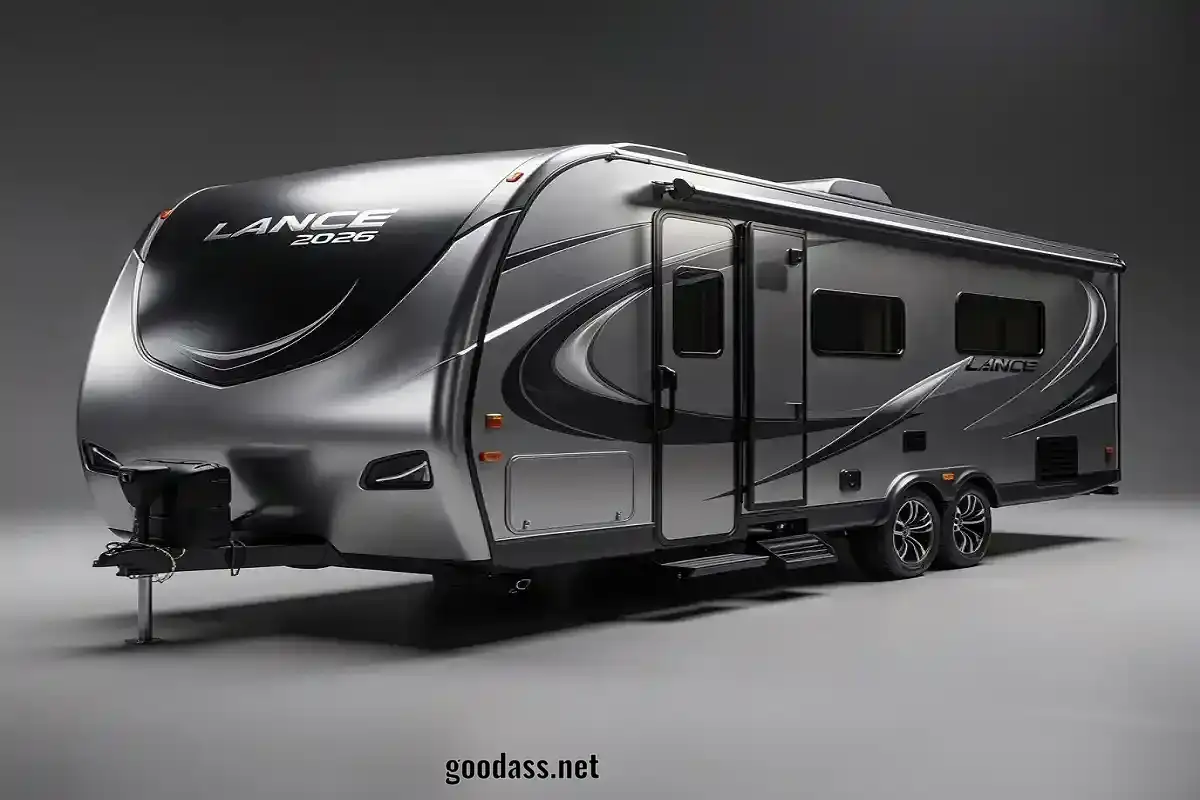
If you’ve spent any time researching ultra-light travel trailers, the Lance name has almost certainly surfaced. Built in Lancaster, California, since 1965, Lance has earned a loyal following among RVers who want a towable that’s lighter than the competition without feeling cheaply made. But are Lance travel trailers genuinely worth the premium price tag? After reviewing the latest 2026 lineup, owner feedback from forums and review sites, and Lance’s own engineering specifications, here’s what serious buyers need to know before signing a purchase agreement.
What Makes Lance Travel Trailers Different
Most travel trailers in the $30,000–$70,000 range share suppliers, materials, and construction shortcuts. Lance takes a noticeably different path, and that difference shows up in three places: materials, weight, and four-season capability.
Construction Quality and Materials
Lance builds its trailers around an aluminum-framed superstructure rather than wood studs, then wraps that frame in composite panels. The walls use Azdel, a thermoplastic composite that replaces the lauan plywood found in most RVs. Azdel is roughly 50% lighter than wood, resists rot and mold, and provides better insulation and sound dampening. This matters because water intrusion is the single most common reason RVs fail prematurely; an Azdel-skinned wall doesn’t delaminate the way a wood-cored wall does when seals eventually leak.
Cabinet interiors use Euro-Lite (also called Lite-Ply), a five-layer poplar plywood imported from Europe. It’s lighter and stronger than standard cabinet-grade plywood, and Lance’s CNC-cut joinery produces tighter cabinet-to-ceiling joints than you’ll typically see at this price point. The factory also avoids formaldehyde and mercury throughout the build, which is a meaningful detail for buyers with chemical sensitivities or allergies.
For 2026, the lineup standardizes several upgrades that were previously optional: Truma AquaGo instant hot-water heaters, Dometic 30K- and 35K-BTU furnaces, a Huck-bolted NXG frame, and Dexter torsion axles. The torsion axle setup, in particular, delivers a noticeably smoother tow than the leaf-spring suspension common on competitor trailers.
Weight and Towability
This is where Lance built its reputation. Even the largest current models stay under roughly 6,000 pounds dry weight, and the smallest unit, the 1475, measures just 7 feet wide and tows comfortably behind midsize SUVs. Owners regularly pull Lance trailers with vehicles like the Honda Pilot, Toyota 4Runner, Ford Explorer, Honda Ridgeline, and half-ton pickups, which opens RV ownership to households that don’t want to buy a heavy-duty truck just to camp.
The aerodynamic front cap, low profile, and disciplined weight management also translate into better fuel economy on the road and less white-knuckle towing in crosswinds.
Four-Season Capability
Lance markets its trailers as four-season certified, and the engineering largely backs the claim. Standard features include dual-pane Euro windows, ducted heating routed to the holding tanks, an enclosed and insulated underbelly, and block foam insulation throughout the walls and ceiling. The optional Four Seasons Comfort package adds water heater bypass valves, winterizing valves, and an insulated bed pad.
Realistic expectations matter here. A Lance will keep you comfortable in late-fall and early-spring temperatures and handles snow loads well. For sustained sub-zero camping, you’ll still need the furnace running continuously, as with every production RV.
The 2026 Lance Travel Trailer Lineup
Lance currently builds about a dozen floor plans, ranging from compact single-axle models to family-sized double-slide trailers.
Compact Models (Under 5,000 lbs)
- Lance 1475: The lightest and narrowest in the lineup at 7 feet wide. Best for solo travelers or couples who prioritize maneuverability over interior space.
- Lance 1575: A long-running favorite. Owners report exceptional reliability, a true queen bed, a usable dry bath, and tow weights around 3,500 lbs that work with mid-size pickups.
- Lance 1685 and 1985: Single-slide layouts that balance livability with weight, popular with weekend campers stepping up from a tent or pop-up.
Mid-Size Models
- Lance 1995: Often cited as the most popular model in the lineup. The bed sits opposite the entry door, creating an open feel, and the rear bath is unusually spacious for the trailer’s footprint.
- Lance 2185 and 2255: Step-up floor plans with hard-walled private bedrooms and larger bathrooms.
- Lance 2285: A frequent reviewer favorite, with dual entry doors, a super slide, and a dry weight of around 4,930 lbs that still tows behind a properly equipped midsize SUV.
Larger Family Models
- Lance 2375, 2445, 2465, and 2565: These trailers add second slides, J-lounge sofas, king-size beds, and sleeping capacity for five or six. The 2465, in particular, is regarded as the brand’s flagship floorplan, with a rear king bedroom slide and front sofa-bed combination.
Lance Travel Trailer Pricing: What to Expect
Lance does not publish MSRPs, but real-world dealer pricing in 2025–2026 falls into these general bands:
- Compact models (1475–1685): roughly $44,000–$56,000
- Mid-size models (1995–2285): roughly $52,000–$62,000
- Larger family models (2375–2565): roughly $57,000–$65,000+
Used Lance trailers from 2017–2022 typically list between $25,000 and $45,000, depending on condition and options. Resale value is one of the strongest selling points: because Lance trailers use Azdel walls and aluminum framing, well-maintained units hold value notably better than mass-market competitors that suffer from delamination and soft floors after a few seasons.
Honest Pros and Cons From Real Owners
What owners consistently praise
Long-term Lance owners repeatedly highlight tight cabinet construction, comfortable factory mattresses, generous storage, easy towing, and the brand’s responsiveness when factory engineers are contacted directly.
Where Lance falls short
Recurring complaints include:
- Inconsistent quality control on individual units
- Slow warranty resolution through dealers
- Low ground clearance
- Premium pricing compared to competitors
Who Should Buy a Lance Travel Trailer?
A Lance is the right choice if you tow with a midsize SUV or half-ton truck, plan to keep the trailer for a decade or more, value four-season capability, and prioritize lower long-term ownership costs over the lowest sticker price.
Before buying, inspect the specific unit thoroughly, especially seals, slide mechanisms, and bathroom plumbing.
Frequently Asked Questions
Are Lance travel trailers worth the higher price?
For long-term owners, yes. For occasional campers, cheaper brands may make more sense.
Can I tow a Lance travel trailer with an SUV?
Yes, several models can be towed by properly equipped SUVs.
Are Lance travel trailers truly four-season?
They perform well in cold weather but still require heating in extreme conditions.
How long do Lance travel trailers last? Typically,y 15–20+ years with proper maintenance.
Where are Lance travel trailers built?
Lancaster, California, USA.
Final Words
Lance travel trailers occupy a deliberate niche in the RV market, lighter than Arctic Fox, more practical than Airstream, and meaningfully better built than mass-market competitors at the same length. That positioning comes with a real price premium, and whether it’s justified depends almost entirely on how you intend to use the trailer.
If you camp two or three weekends a year at a developed campground and plan to trade up in a couple of seasons, a Jayco, Winnebago, or Grand Design will likely serve you just as well for thousands less. But if you’re the kind of owner who keeps a trailer for ten or fifteen years, camps in shoulder seasons, tows with a midsize SUV or half-ton truck, and cares about resale value when the time comes to upgrade, Lance is genuinely difficult to beat. The Azdel walls, aluminum frame, four-season insulation, and California-built craftsmanship aren’t marketing slogans; they’re the reasons 2010-era Lance trailers are still on the road and still commanding strong used prices in 2026.