Picture this. You are planning a trip, and you type a question into Google. You want to know about a hidden beach, a hiking trail, or a small restaurant that no big magazine has written about. You click a result and find a real person telling you about the time they went there. That person runs a travel blog. But what is a travel blog, exactly? This guide explains it in plain words, from where it began to what makes a good one.
The Simple Answer
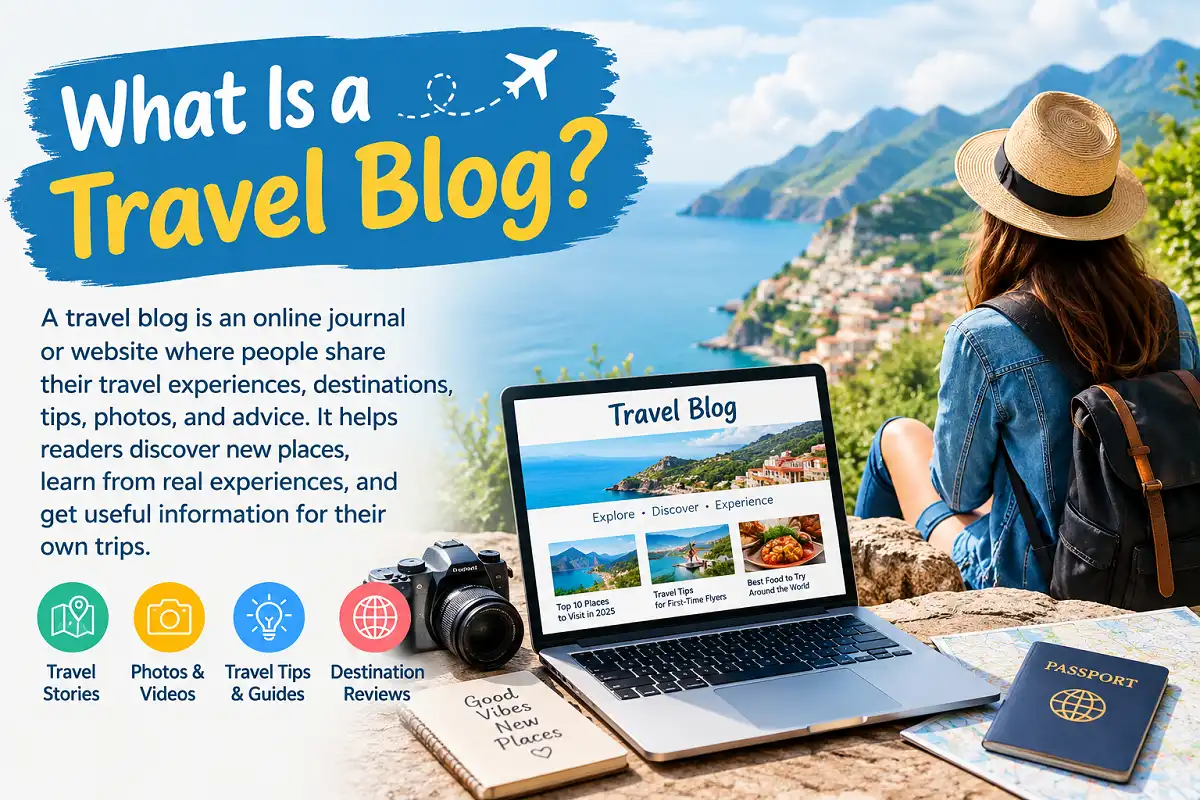
So, what is a travel blog? In simple words, a travel blog is a website or online journal where a person writes about their trips. They share stories, tips, photos and videos from the places they visit. Some bloggers write for a few friends. Others write for readers all over the world.
A travel blog is personal. A brochure tells you a place is beautiful. A travel blog tells you what the writer saw, what they did, and what they would do differently next time. That personal voice is the heart of the whole idea.
Where the Term Comes From
The word “blog” itself is fairly young. People coined it in the late 1990s, and 1999 was a big year when many people started sharing their thoughts online. A few people had already begun daily, personal websites some years before that. Blogs show the newest post first and the older ones below it, in reverse order. This is how most blogs still work today.
Travel found its place on the internet early. TravelBlog.org launched in April 2002, and it was the first popular website to use the term “travel blog”. Its goal was simple. It wanted to help people share their real travel experiences with friends, family and other travelers. The site is free to use. By October 2007, it held over 50,000 members and more than 200,000 blog entries. Big newspapers such as The New York Times and The Washington Post wrote positive things about it.
How a Travel Blog Looks and Works
A travel blog works like any other blog. The writer posts a new entry, and readers can find it and read it. Many travel blogs add extras that make the story richer:
- Photos from the trip
- Embedded videos
- Maps that show the route
- Forums or comment sections where readers talk to the writer
Some blogging platforms also let the writer notify subscribers whenever a new update goes live. This is very handy for someone travelling for months, because family and friends know right away when a new story appears.
Not every travel blog looks like a classic blog, either. One writer pointed out that many sites, including his own, look quite unlike a typical blog, even though they still count as blogs. Some bloggers even avoid the word. One writer said she preferred calling her site a “travel website” because “blog” sounded dull to her. Whatever the name, the idea stays the same. A real person shares real travel experience online.
Why People Start a Travel Blog
People start travel blogs for very different reasons. Understanding these reasons helps answer the question of what is a travel blog, because the purpose shapes the blog.
To keep family and friends updated. Many people travel for a long time, such as a round-the-world trip or a year-long break from work. They start a blog to tell their loved ones back home what is happening. If strangers read it, that is a bonus. When the trip ends, the blog often ends too. There are exceptions, of course.
To document their own journeys. David Leiter started his blog in 2019 to record his international trips and share his photos. He is an American who says he has travelled the world full time for ten years. All the writing and pictures on his site come from his own experience.
To tell a bigger story. We Said Go Travel began on Blogspot as a place for one woman’s travel memoir. It told the story of a sabbatical year, an underwater engagement, and twelve countries. As it grew, she moved it to a full website in March 2011.
To help other travelers plan. Some people simply love travel and want to help others. They share what they learned so readers can plan their own trips with more confidence. One travel writer says this is what a good travel blog should be at its core.
Travel Blog vs. Guidebook
Here is a fair question. Anyone can pick up a copy of Lonely Planet or Frommer’s. These books list the top museums, hotels, attractions and restaurants. A traveler can head off on vacation quite well prepared with just a guidebook. So why do people read travel blogs at all?
The answer is that readers want more. A guidebook gives a list. A travel blog gives an experience. It shows how a place felt, what surprised the writer, and which tips really worked. It also shows the small details that a printed list cannot fit, like an off-the-beaten-path restaurant or a hidden beach bar someone found by chance. That is why the two do not replace each other. Readers use both.
Different Kinds of Travel Blogs
Once you understand what is a travel blog, you will notice that these blogs come in several shapes.
Personal travel blogs. One person writes about their own trips. David Leiter’s blog is a good example. It covers destinations, hidden places and personal experiences from around the globe.
Community travel blogs. Many writers contribute to one site. We Said Go Travel has over sixteen hundred writers from seventy-five countries. They share stories with photos and video, and the site has also hosted live and online events and travel writing contests.
Blog platforms. These sites let anyone build their own travel blog. TravelBlog.org is one of them. Members can share unlimited photos, embed videos, create maps and join forums.
Niche travel blogs. A niche blog focuses on one topic. It might cover RV travel, hiking and camping, vegan travel, or just one city or country. A travel blogger with more than fifteen years of experience says niche blogs do better today than general ones. Focusing on one area lets the writer become a real expert. Readers then know exactly where to go for information on that subject.
What Makes a Good Travel Blog
Not every travel blog helps its readers. So what separates a good one from an average one?
First, it shares real experience. Readers trust a writer who has actually been to the place. David Leiter’s site, for example, says everything on it comes from his own trips.
Second, it helps the reader. A good travel blog does more than describe a trip. It gives readers something they can use in their own journey. That is the point of sharing.
Third, it stays focused. The experienced blogger mentioned above gives clear advice: do not try to be everything to everyone. Go narrow and go deep. A blog with a clear subject is easier to follow, and readers come back to it.
Fourth, it takes patience. Running a successful travel blog is hard work and takes time, like building any other business. The idea of getting paid to travel the world sounds wonderful, but the field is crowded and gets more crowded every day.
Some bloggers also say the real reward is not money. One couple who run a travel site says their main goal is not a big profit. They want to help readers travel better and make good memories. They say a comment or an email from a reader who planned a perfect trip with their help made all the hard work feel worth it.
Why Readers Love Travel Blogs
Readers turn to travel blogs for many reasons. Some want ideas for their next trip. Some want to know what a place is really like before they spend money on it. Some just enjoy reading a good story from far away. In each case, the reader gets a human voice instead of a plain list of facts.
If you are still asking yourself what is a travel blog worth to a reader, think of it as advice from a friend who has already been there. That kind of advice feels honest, and that is why people keep reading these blogs.
Final Thoughts
So, what is a travel blog? It is an online space where a real traveler shares real stories, tips, photos and videos. Some blogs are simple diaries for family and friends. Some are detailed guides made to help strangers plan their trips. Some are memoirs, and some are huge community sites with hundreds of writers.
The idea began in the early days of blogging, and it has grown ever since. It keeps growing because readers want more than a guidebook can give. If you want to read one, start with a destination you love. If you want to write one, share what you know and keep it real.
For more update please visit my website:goodass